Walk into any design studio in Milan or a hobbyist's garage in Portland, and you'll likely spot a Paletta swatch book within arm's reach. It's not flashy. No glossy cover, no celebrity endorsement. Yet this modest collection of color chips has become something of a silent standard for anyone who takes hue seriously. I first encountered Paletta at a letterpress shop in Copenhagen—the owner, a gruff man named Lars, tossed a worn copy across the counter and said。'Pick your poison.' That tattered booklet had more thumbprints than a crime scene, each smudge a story of a job well done.What makes Paletta different from the countless Pantone alternatives?Precision without pretense. Each Paletta chip is coated with a matte finish that resists glare under workshop lights—a small detail that matters when you're matching ink to paper at 2 a.m. The numeric coding system, while less poetic than 'cerulean' or 'burnt sienna', follows a logical grid that seasoned users internalize within weeks. I've watched apprentices fumble with fancy fan decks only to abandon them for a Paletta index card taped to the wall. There's a democracy to that. A $30 Paletta set delivers the same reference point to a Brooklyn freelancer as to a packaging team at a multinational.Then there's the faded-chip problem. Every color matching system suffers from it—sunlight bleaches the swatches, and suddenly your 'true red' is a dusty rose. Paletta's solution is almost stubbornly simple: individual replacement chips. No need to buy a whole new book. I replaced a single yellow chip last spring after leaving my set on a windowsill for a month. Cost me three dollars and a stamp. Try doing that with a proprietary binder system that locks you into a hundred-dollar upgrade. This kind of modular thinking extends to the Paletta digital companion app, which—let's be honest—feels like an afterthought. The app's color picker is clunky, and the cross-referencing tool lags on older phones. But the physical chips?They earn their keep.Critics argue that Paletta lacks the cultural cachet of bigger names. Fair point. Mention Paletta at a branding pitch and you might get blank stares. Yet in textile design, where dye lots shift and production runs vary, Paletta's stability has earned quiet loyalty. A weaver I know in Oaxaca uses Paletta to communicate with her dye house—no shared language, just chip numbers scrawled on order forms. That's the unglamorous reality of color work: it's less about inspiration boards and more about getting the same result six months later. Paletta excels at that repetition. The chips are thick enough to survive being dropped in a dye bath (don't ask)。
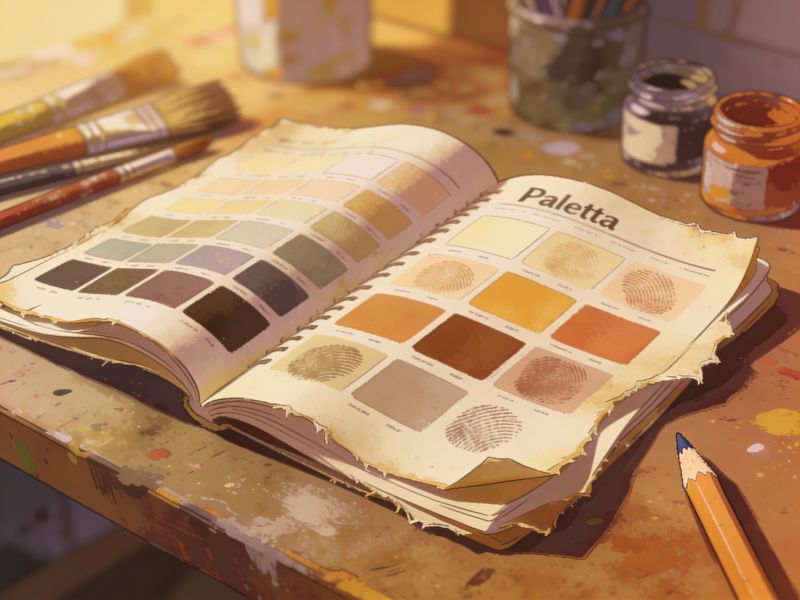
and the ring binding opens flat without cracking.Would I recommend Paletta to a weekend painter?Probably not—the upfront cost stings for casual use. But for anyone who treats color as a working tool rather than a mood board accessory, the Paletta system rewards familiarity. It's the kind of product that grows on you, like a good pocket knife. My advice: buy the starter set。
ignore the app, and write your own notes in the margins. The book is meant to be used, not admired. And if you ever find yourself squinting at a faded chip under fluorescent light, remember Lars from Copenhagen—he'd tell you to stop overthinking and just pick the damn color.